
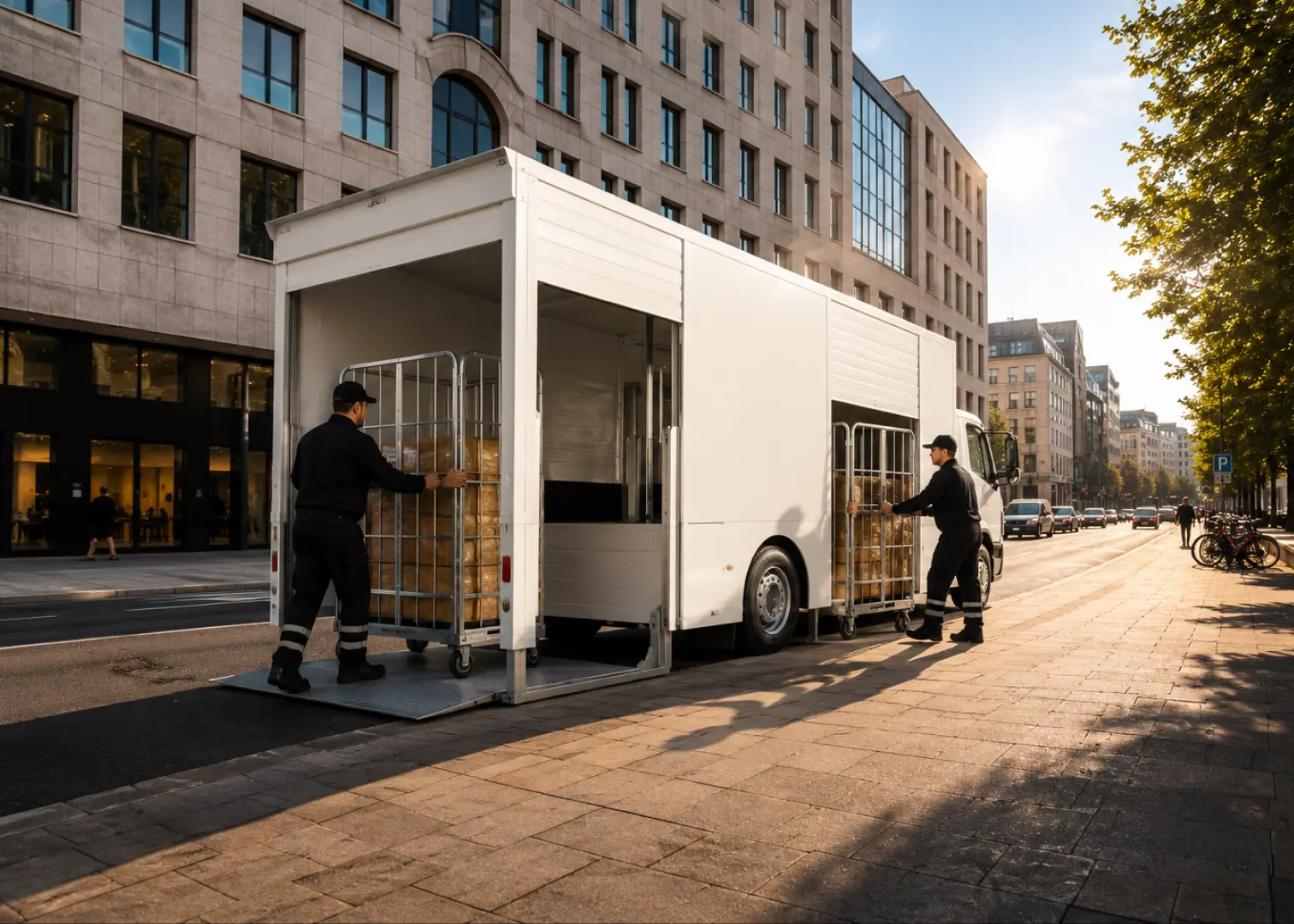

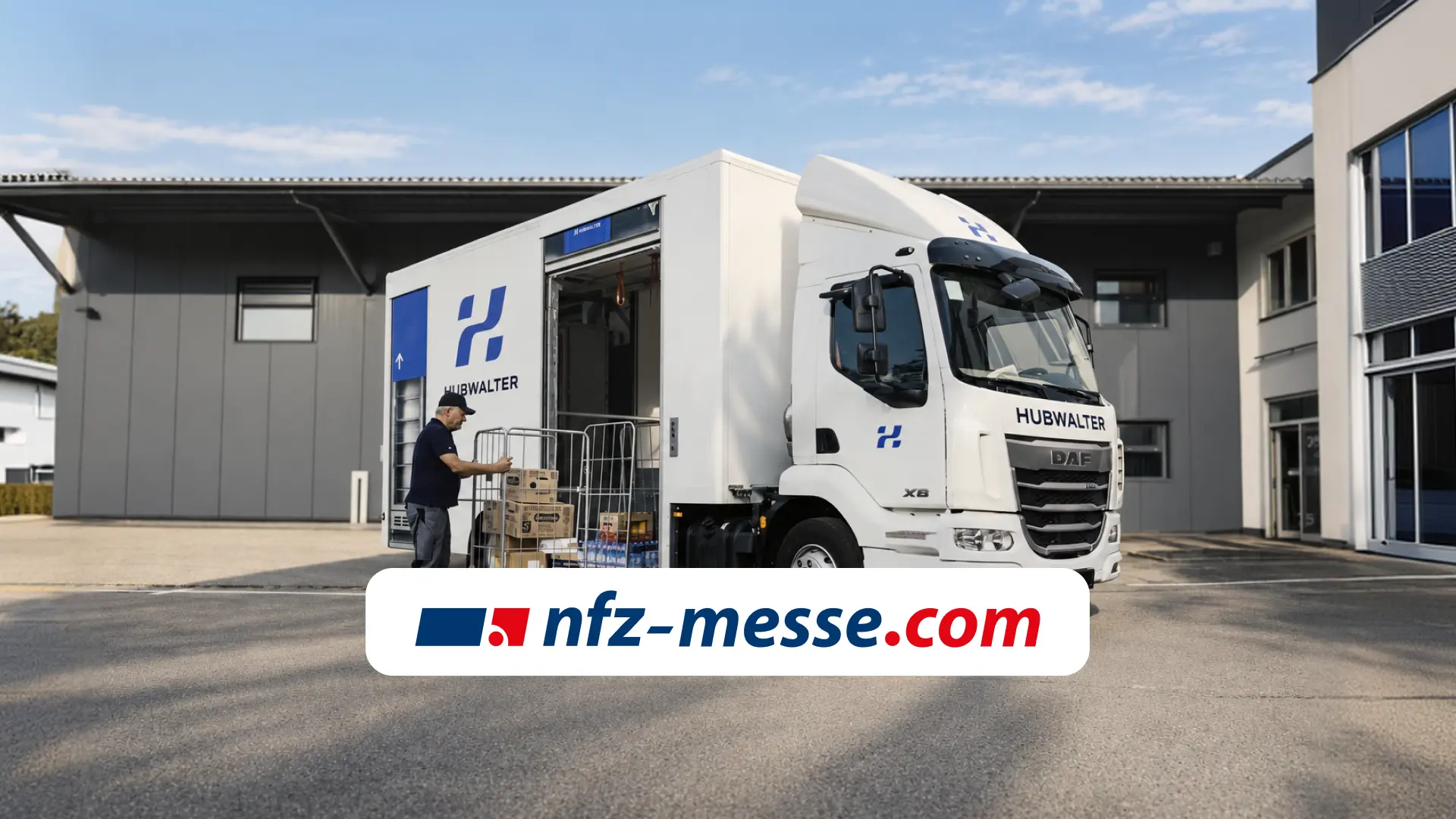

Ergonomics in delivery transport starts with how you access your goods.
Ergonomics in distribution transport is often associated with heavy lifting. In reality, physical strain is frequently caused by the sum of many repetitive tasks: reaching, pulling, pushing, searching, moving, turning, lowering, picking up, and returning to the vehicle.
On multi-stop routes in particular, these movements are repeated many times a day. Therefore, the decisive factor is not just the weight of an individual load unit, but also how easily it can be accessed.
Access determines the workflow
In classic box bodies, access is often via the rear. This works for many applications, but reaches its limits where many stops, varying cargo positions, and tight unloading situations coincide.
If the required goods are not directly accessible, additional work steps are created. Load units must be shifted, other goods moved aside, or paths covered multiple times. Returns, empty containers, or soiled laundry can also make access increasingly difficult over the course of a route.
Ergonomics therefore begins with the question: Where are the goods located, and how does the driver reach them?
Multi-sided access creates new possibilities
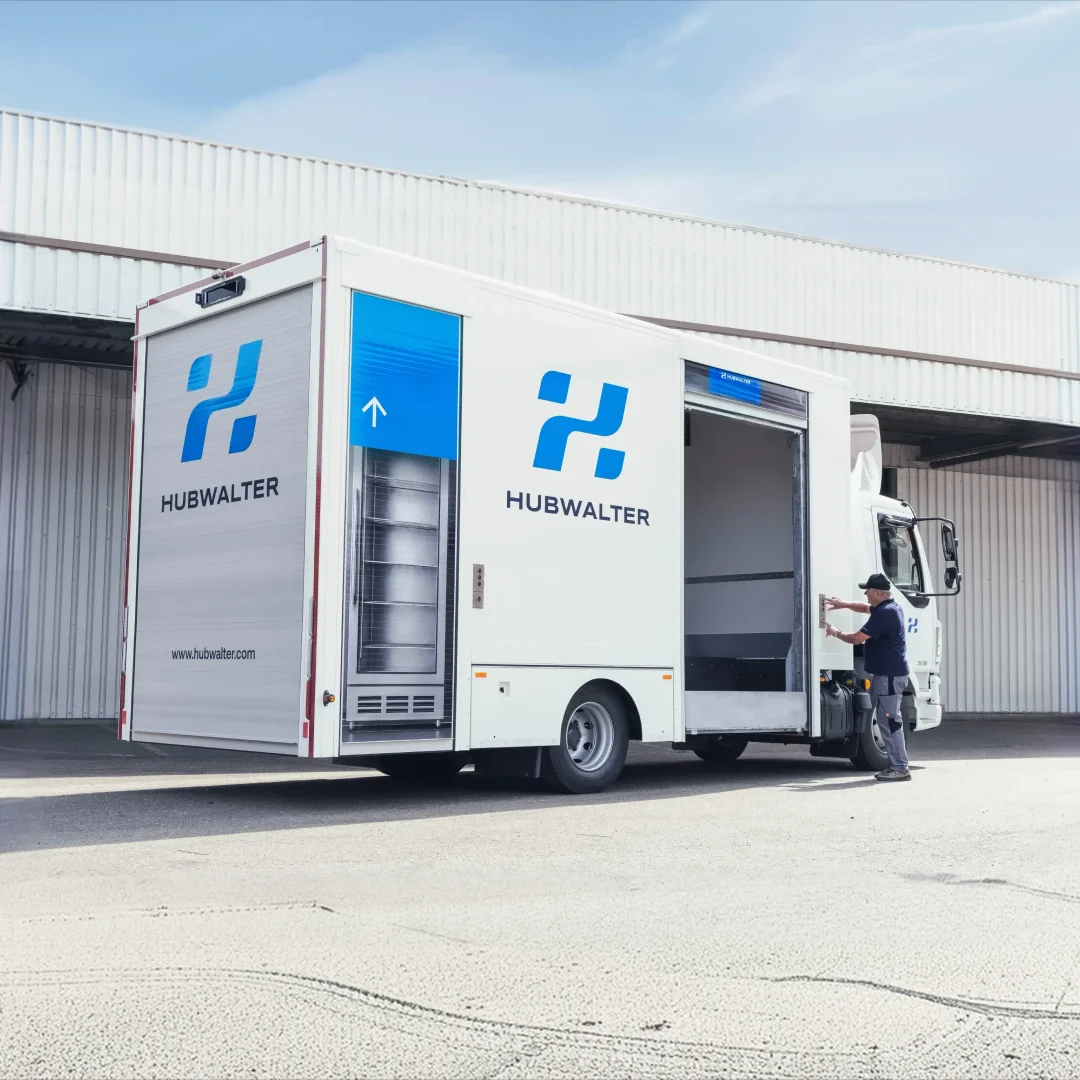
The Hubwalter system reorganizes how goods are accessed. The cargo space is accessible not only from the rear but, depending on the configuration, also from the sides of the vehicle. Internal lift systems make it possible to move load units to different working and unloading heights or lower them to ground level.
This allows workflows to be more closely adapted to the specific stop situation. The driver does not necessarily have to work through the entire cargo space from the rear, but can access structured loading zones more precisely.
This reduces unnecessary movement and can decrease the need for rearranging cargo.
Ergonomics as a system issue
For Hubwalter, ergonomics is not a single feature, but part of the overall system. The interaction between the vehicle body, goods access, loading zones, lift systems, and load securing is crucial.
A more ergonomic workflow is achieved when goods are positioned logically, guided securely, and are easier to reach at the stop. This not only relieves physical strain on drivers but also makes the entire process more predictable.
This difference can be particularly relevant in sectors such as textile services, rental laundry, catering and service delivery, convenience, retail logistics, or urban supply chains. These areas frequently involve a combination of frequent stops, changing load units, returns, and limited unloading space.
Hubwalter therefore does not start with the unloading process, but with access to the goods. Because to improve ergonomics in distribution transport, you have to look at the entire workflow at the vehicle.
