
FAQ
Frequently asked questions
Find answers to your questions here. Please don't hesitate to contact us if you can't find what you're looking for.

Category
What is the Hubwalter system?

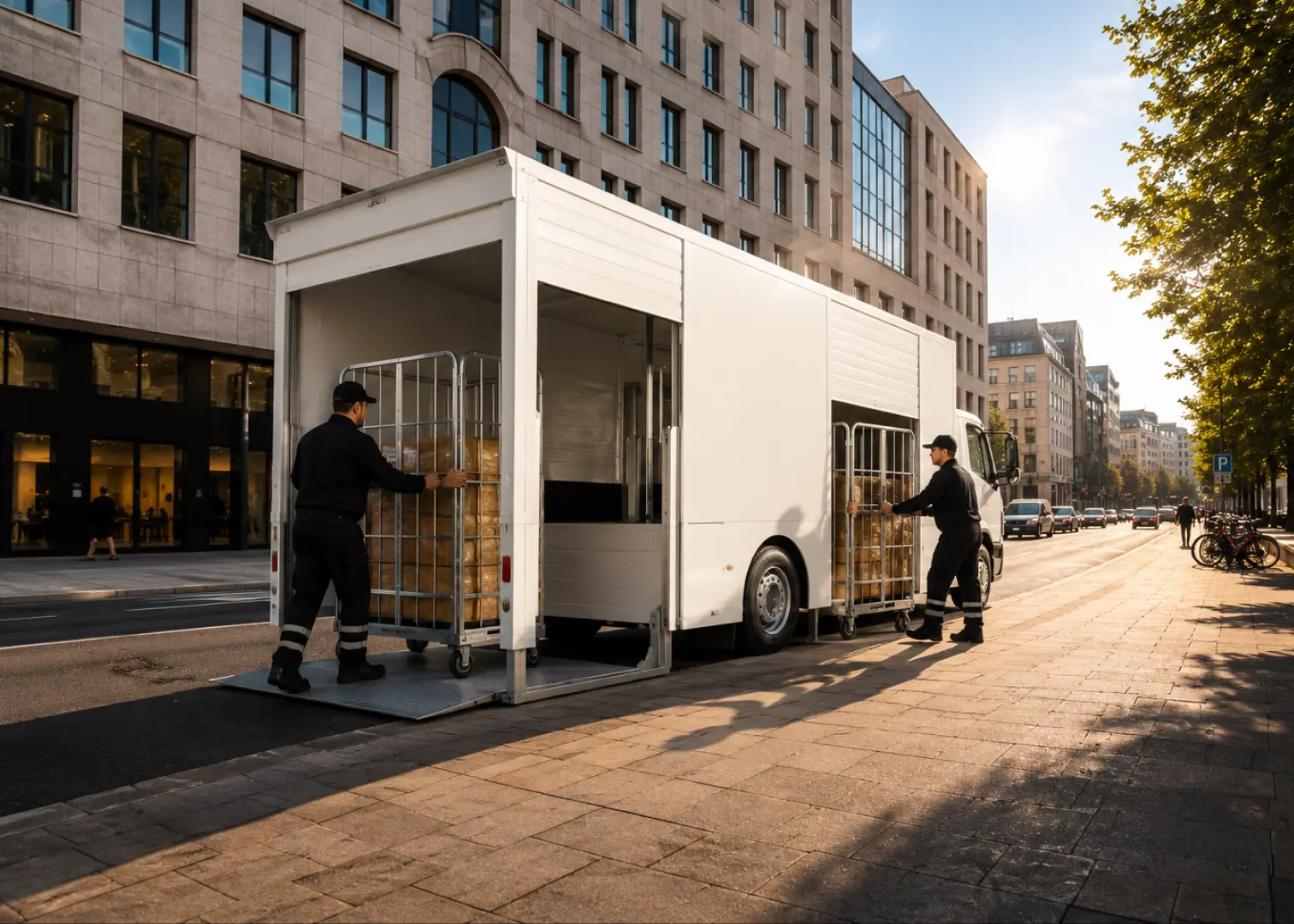
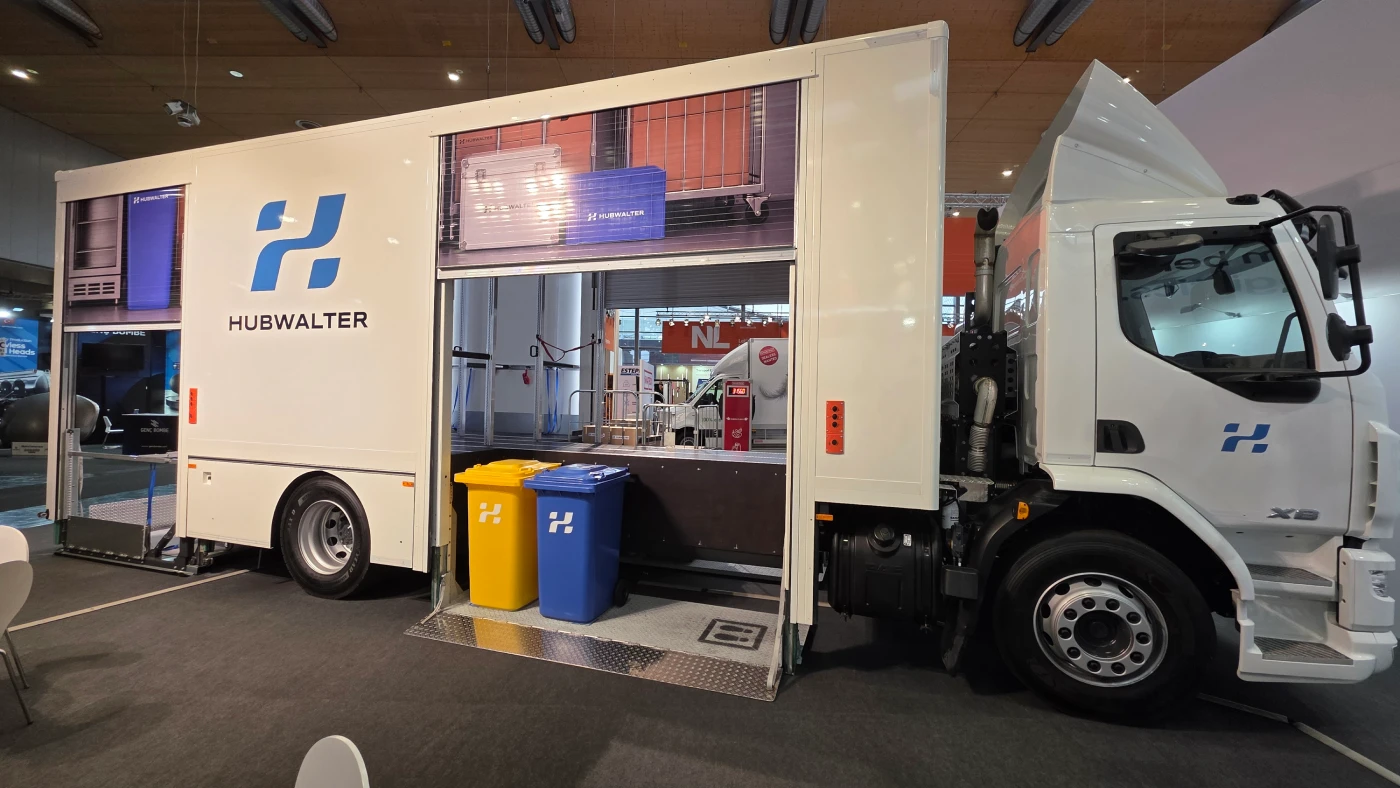
The Hubwalter system is a vehicle concept designed for urban and regional multi-stop logistics. It combines a closed box body with multi-sided access to goods, internal lift systems, and structured loading zones.
The goal is to make accessing goods at each stop easier, reduce walking distances and handling steps, and make loading and unloading processes more efficient, ergonomic, and predictable.
What sets Hubwalter apart from a traditional box body?
A classic box body is usually loaded and unloaded via the rear. As a result, drivers often have to search for goods in the cargo area, rearrange them, or move them over longer distances.
Hubwalter enables access to cargo not only via the rear but also through side entrances. Internal lifts bring load units to the appropriate access height or down to ground level. This makes the cargo space more structured and significantly simplifies the process at each stop.
Which areas of application is Hubwalter suitable for?
Hubwalter is particularly suitable for routes with many stops, frequent cargo access, tight unloading areas, and changing load units. Typical areas of application are urban and regional distribution routes where drivers regularly need to reach different cargo positions.
The system is particularly relevant where search times, walking distances, rearranging cargo, empty containers, or returns complicate operations at the vehicle.
Which industries is the system suitable for?
The Hubwalter system is designed for various areas of multi-stop logistics. This includes, in particular, branch and inner-city logistics, convenience and gas station supply, beverage and catering logistics, textile services, rental laundry logistics, drugstore supply, and other urban distribution transport.
The decisive factor is not just the industry itself, but the specific route profile: many stops, frequent retrieval processes, and the need for fast, structured cargo access.
Technology & Cargo Access
How does multi-side cargo access work?
The cargo area can be accessed via multiple entry points. Depending on the vehicle and body configuration, rear and side access is possible. This allows the driver to work closer to the required loading zone and eliminates the need to organize every retrieval via the rear.
The internal lift systems facilitate access by bringing load units to different heights or lowering them to ground level. This allows the unloading process to be adapted more flexibly to the specific stop situation.
Which load carriers can be moved with Hubwalter?
Hubwalter is not limited to a single type of load carrier. Depending on the configuration, various load carriers can be accommodated, such as roll containers, roll cages, Euro pallets, beverage crates, empty container bins, or other standard transport units.
The specific design depends on the vehicle class, body variant, loading profile, and area of application.
Which vehicle classes is Hubwalter designed for?
Hubwalter is designed for commercial vehicles in urban and regional distribution transport. The specific vehicle class depends on the operational profile, required payload, loading volume, load carriers, and the desired body concept.
The design is project-specific and coordinated with customers, body manufacturers, and component suppliers.
Driver Routine & Ergonomics
What are the benefits of Hubwalter for drivers in their daily routine?
Hubwalter is designed to make the daily work routine at the vehicle simpler and more structured. Drivers can access the required goods more efficiently, spend less time searching and rearranging, and cover less distance walking through or around the vehicle.
Especially with many stops, this can help reduce time pressure, make processes more predictable, and decrease physically demanding tasks.
How does Hubwalter support ergonomic working?
The internal lift systems make it possible to bring load units to a convenient access height or lower them to ground level. This helps reduce awkward lifting, pulling, and carrying tasks.
Multi-sided access also helps to retrieve goods exactly where they are needed. This can reduce movement and provide physical relief for drivers in daily delivery operations.
Fleet Deployment, Piloting & Contact
How can I determine if Hubwalter is a good fit for a specific route?
The specific route profile is the deciding factor. Hubwalter considers factors such as the number of stops, dwell times, unloading areas, load carriers, the sequence of removals, empty container and return processes, and the physical strain on drivers in their daily work.
On this basis, it is possible to assess whether and in what configuration the system makes sense for a fleet or a specific route.
Can Hubwalter be tested with individual vehicles first?
Yes, starting with individual vehicles or defined pilot applications is a sensible approach. This allows the system to be tested under real-world conditions before deciding on a broader integration into the fleet.
A pilot operation can help identify suitable routes, evaluate processes, and determine the appropriate vehicle and body configuration for the specific area of application.
Where can I see Hubwalter live or learn more?
Hubwalter will be presenting the system at IAA TRANSPORTATION 2026 in Hanover. The trade fair takes place from September 15 to 20, 2026; the press and media day is September 14, 2026. You can find Hubwalter in Hall 25, Stand C81.
The system will be demonstrated live on a vehicle there. Interested parties can also contact Hubwalter directly to discuss operational profiles, pilot opportunities, or specific requirements.